 Nirmala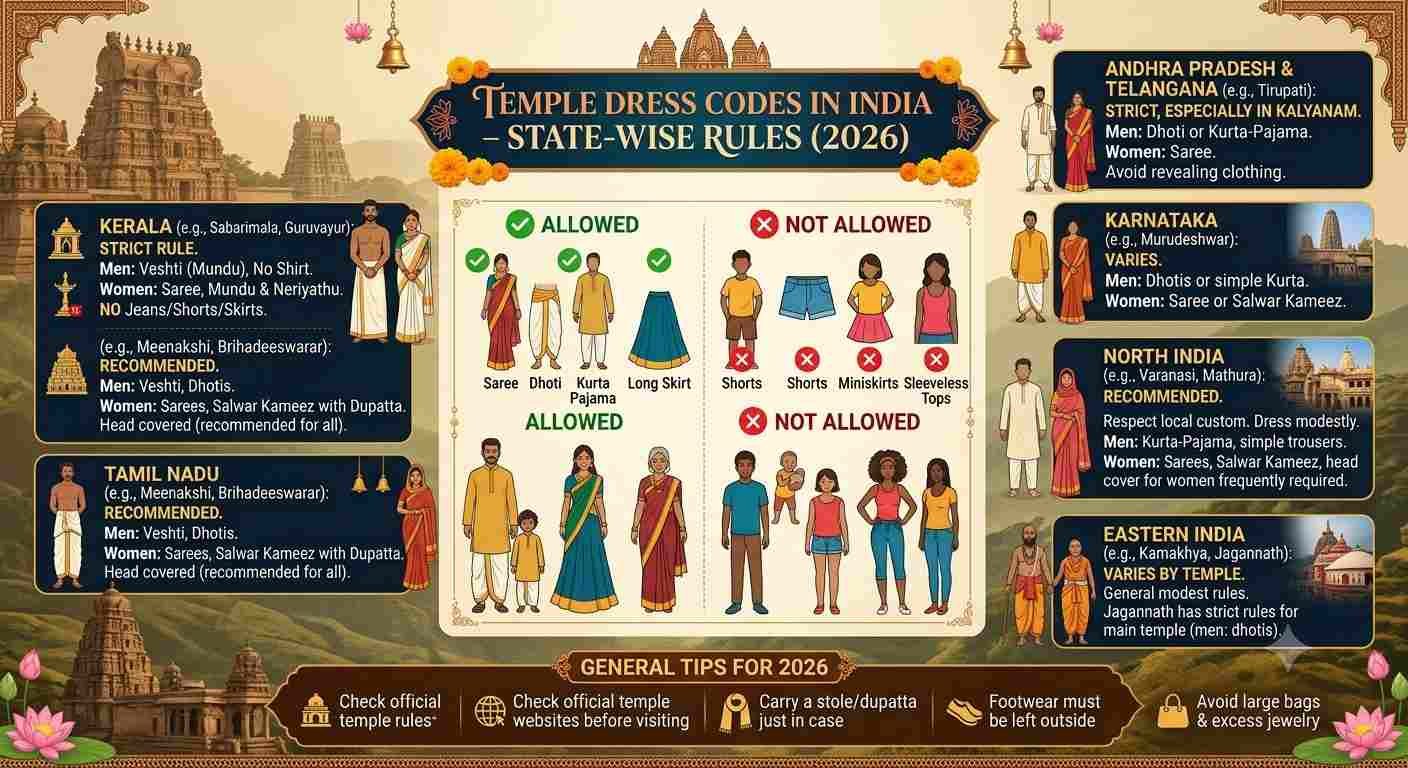
India is known as the land of spirituality, with thousands of ancient temples attracting millions of devotees and tourists every year. From the sacred hills of Tirumala to the peaceful temples of Kerala and the magnificent shrines of Tamil Nadu, each temple has its own customs and traditions. One of the most important aspects every visitor should know before planning a temple visit is the dress code.
Wearing appropriate clothing is more than following a rule—it’s a sign of respect for the temple, its traditions, and fellow devotees. While many temples simply expect modest attire, several renowned temples have specific dress code requirements that visitors must follow.
This guide explains the temple dress code rules followed in different parts of India and offers useful tips to help you enjoy a smooth and respectful pilgrimage.
Why Is a Dress Code Important in Hindu Temples?
Temples are sacred places dedicated to worship and spiritual practices. Appropriate clothing helps preserve the religious atmosphere and reflects humility before the deity.
Following the prescribed dress code also:
- Shows respect for centuries-old traditions.
- Creates a peaceful environment for worship.
- Prevents inconvenience at temple entrances.
- Helps visitors blend into local customs.
- Demonstrates cultural sensitivity during pilgrimage.
Standard Dress Code Followed in Most Indian Temples
Although rules differ from one temple to another, the following clothing is generally considered suitable.
Suitable Attire for Men
- Dhoti or Veshti
- Kurta with Pyjama
- Full-length trousers
- Traditional Indian shirts
Avoid:
- Shorts
- Sleeveless T-shirts
- Torn or distressed jeans
- Sportswear
Suitable Attire for Women
Women are encouraged to wear:
- Saree
- Salwar Kameez
- Churidar with Dupatta
- Long Kurti with Leggings
- Traditional ethnic dresses
Avoid:
- Short skirts
- Crop tops
- Transparent clothing
- Extremely tight outfits
- Sleeveless garments in temples with strict regulations
Temple Dress Codes by Region
South India
South Indian temples generally follow stricter traditions.
Andhra Pradesh
The Tirumala Sri Venkateswara Temple recommends:
Men
- Dhoti
- Kurta
- White shirt with dhoti
Women
- Saree
- Half Saree
- Churidar with Dupatta
- Salwar Suit
Western outfits such as shorts and sleeveless dresses are discouraged.
Telangana
Major temples like Yadadri encourage traditional Indian clothing.
Visitors wearing modest ethnic wear generally experience smooth entry.
Tamil Nadu
Temples such as Meenakshi Amman Temple and Ramanathaswamy Temple encourage visitors to wear traditional Indian attire.
Recommended:
- Sarees
- Dhoti
- Kurta
- Salwar Kameez
Avoid revealing western clothing.
Kerala
Kerala is famous for having some of India’s most traditional temple dress regulations.
Many temples prefer:
Men
- Mundu (Dhoti)
- Bare upper body or angavastram inside certain temples
Women
- Saree
- Set Mundu
- Salwar Kameez (where permitted)
Many temples provide dhotis for rent or purchase near the entrance.
Karnataka
Popular temples including Dharmasthala and Kukke Subramanya recommend modest traditional clothing.
Most devotees choose:
- White dhoti
- Kurta
- Saree
- Churidar
North India
Unlike South India, most North Indian temples follow flexible dress guidelines.
Popular temples include:
- Kashi Vishwanath
- Ayodhya Ram Mandir
- Banke Bihari Temple
- Vaishno Devi
Visitors should simply wear clean, decent clothing that covers the shoulders and knees.
East India
Jagannath Temple, Odisha
Traditional Indian clothing is preferred.
Beachwear, sleeveless clothing, and shorts should be avoided.
Kamakhya Temple, Assam
Simple ethnic wear is recommended.
Devotees should avoid flashy or revealing outfits.
Himalayan Temples
Temples located in Uttarakhand such as Kedarnath and Badrinath require visitors to dress according to the weather.
Recommended:
- Warm jackets
- Woollen clothing
- Comfortable walking shoes (to be removed before entering)
- Modest attire suitable for worship
What Foreign Visitors Should Know
International visitors are welcome at many Indian temples. While expensive traditional clothing isn’t necessary, modest attire is essential.
Good options include:
- Long trousers
- Long skirts
- Kurtas
- Scarves
- Covered shoulders
Some temples also provide shawls or dhotis for visitors.
Temple Etiquette Beyond Clothing
Following the dress code is only one part of temple etiquette.
Remember these important practices:
- Remove footwear before entering.
- Maintain silence inside the temple.
- Avoid photography where prohibited.
- Follow queue systems patiently.
- Respect temple priests and volunteers.
- Do not litter.
- Switch mobile phones to silent mode.
Common Mistakes Visitors Should Avoid
Many pilgrims unknowingly violate temple rules by wearing:
- Shorts
- Sleeveless tops
- Mini skirts
- Ripped jeans
- Transparent clothing
- Caps inside sanctum areas
- Excessive jewellery during crowded festivals
Checking temple guidelines before travel helps avoid disappointment.
Tips Before Visiting Any Temple
- Visit the official temple website for updated rules.
- Carry a shawl or dupatta.
- Pack a traditional outfit if visiting multiple temples.
- Wear comfortable clothing suitable for long queues.
- Keep valuables to a minimum.
- Follow instructions from temple authorities.
Conclusion
Every temple in India reflects centuries of spiritual heritage, and respecting its customs begins with dressing appropriately. While dress code requirements vary from state to state and temple to temple, modest, clean, and traditional clothing is almost always appreciated.
Whether you’re visiting Tirumala, Guruvayur, Meenakshi Temple, Jagannath Puri, Kedarnath, or any other sacred shrine, taking a few minutes to understand the local dress code can make your pilgrimage more comfortable and spiritually fulfilling.
Respecting temple traditions not only ensures a hassle-free darshan but also allows you to experience India’s rich cultural and religious heritage in its true essence.
Frequently Asked Questions (FAQs)
1. Is traditional clothing compulsory in all Indian temples?
No. Many temples allow modest western clothing, but famous temples in South India may require traditional attire.
2. Can women wear leggings to temples?
Yes. Leggings paired with a long kurti or tunic are generally acceptable.
3. Why are shorts prohibited in many temples?
Shorts are considered inappropriate in sacred spaces because temples emphasize modesty and respect.
4. Do temples provide traditional clothes?
Several temples, especially in Kerala and Andhra Pradesh, offer dhotis and shawls for rent or purchase.
5. Are jeans allowed in temples?
Plain full-length jeans may be allowed in many temples, but strict temples often recommend traditional Indian clothing.