

Ahobilam Temple is one of the most revered spiritual destinations in Andhra Pradesh, known as the divine land where Lord Narasimha, the powerful incarnation of Lord Vishnu, manifested to uphold dharma. Located amidst the Nallamala Hills in Kurnool district, Ahobilam is unique for housing the sacred Nava Narasimha Temples, spread across forested hills, rocky terrain, and serene valleys.
This ancient pilgrimage site blends mythology, devotion, adventure, and nature, offering a spiritually intense experience unlike any other temple destination in India.
Religious Importance of Ahobilam Temple
Ahobilam is regarded as the holiest shrine of Lord Narasimha. Hindu belief states that this is the exact region where Narasimha emerged from a pillar to destroy Hiranyakashipu and protect young Prahlada. Because of this divine event, Ahobilam is often referred to as the birthplace of Narasimha’s incarnation.
What distinguishes Ahobilam from other Narasimha temples is the worship of nine different forms of the deity, each symbolizing a specific divine emotion—anger, compassion, protection, wisdom, and grace. Devotees believe that worshipping all nine forms removes fear, negativity, and karmic obstacles.
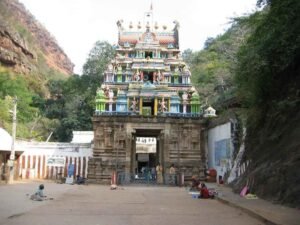
Ahobilam-Temple
The Nava Narasimha Temples Explained
The Nava Narasimha Kshetram consists of nine shrines located in Upper Ahobilam and Lower Ahobilam:
- Ugra Narasimha – Fierce protector
- Krodha Narasimha – Symbol of righteous anger
- Malola Narasimha – Compassionate form
- Jwala Narasimha – Fiery manifestation
- Yogananda Narasimha – Meditative form
- Bhargava Narasimha – Warrior aspect
- Karanja Narasimha – Forest guardian
- Chatravata Narasimha – Under sacred tree
- Pavana Narasimha – Purifier and liberator
Reaching some of these shrines requires trekking, making the pilgrimage both spiritual and physical.
Historical Background of Ahobilam
Ahobilam’s origins date back to Vedic and Puranic periods, with references found in ancient scriptures such as the Skanda Purana and Narasimha Purana. Over centuries, the region became a prominent center of Sri Vaishnava tradition.
The temple gained prominence during the Vijayanagara Empire, when rulers contributed to temple construction and ritual development. The establishment of the Ahobilam Mutt further strengthened religious administration, ensuring the preservation of traditions and temple practices that continue today.

Ahobilam-Waterfall
Upper Ahobilam vs Lower Ahobilam
Ahobilam is divided into two distinct pilgrimage zones:
Lower Ahobilam
- Houses the main Malola Narasimha Temple
- Easier access for pilgrims
- Accommodation and basic facilities available
- Starting point for ropeway services
Upper Ahobilam
- Contains most Nava Narasimha shrines
- Surrounded by dense forest and hills
- Requires trekking or ropeway travel
- Offers a deeply immersive spiritual experience
Most devotees begin their journey at Lower Ahobilam before proceeding to Upper Ahobilam.

The-Significance-of-Ahobilam
Ahobilam Temple Darshan Timings
General Darshan Timings:
- Morning: 6:30 AM – 1:00 PM
- Evening: 3:00 PM – 8:30 PM
Timings may change during festivals, special poojas, or temple events. Early mornings are ideal for peaceful darshan.
Distance from Major Cities
- Nandyal: ~70 km
- Kurnool: ~150 km
- Tirupati: ~330 km
- Hyderabad: ~370 km
- Bengaluru: ~400 km
How to Reach Ahobilam Temple
By Road
Ahobilam is accessible via road from Nandyal. APSRTC buses, private taxis, and self-drive options are available.
By Train
- Nearest railway station: Nandyal
- From Nandyal, Ahobilam can be reached by road in about 2–3 hours.
By Air
- Nearest airport: Kurnool Airport
- Alternative airports: Tirupati or Hyderabad
Ahobilam Ropeway Facility
The Ahobilam Ropeway significantly reduces trekking time and offers panoramic views of the surrounding forest and hills.
Ropeway Benefits:
- Safer for elderly devotees
- Shorter travel time
- Scenic aerial journey
- Operates on fixed schedules (weather dependent)
Accommodation Options at Ahobilam
Temple Accommodation
- Managed by Ahobilam Mutt
- Affordable rooms
- Limited availability
- Advance booking recommended
Nearby Town Stays
- Nandyal offers better hotels and lodges
- Suitable for families and large groups
Pilgrims are advised to carry essentials due to the remote location.
Best Time to Visit Ahobilam
- October to February: Pleasant climate, ideal for trekking
- Monsoon season: Green and scenic but slippery paths
- Festival periods: Narasimha Jayanti attracts heavy crowds
Early morning visits provide the most peaceful experience.
Important Tips for Ahobilam Pilgrims
- Wear comfortable walking or trekking shoes
- Carry water and light snacks
- Follow forest and temple guidelines
- Avoid plastic and littering
- Respect temple customs and rituals
Why Ahobilam Should Be on Every Pilgrim’s List
Ahobilam is not just a religious site—it is a sacred journey through divine mythology and untouched nature. The powerful presence of Lord Narasimha makes it one of the most spiritually intense pilgrimage destinations in India.
For devotees seeking strength, protection, and inner transformation, Ahobilam offers a deeply fulfilling experience.
Frequently Asked Questions – Ahobilam Temple
1. What makes Ahobilam Temple spiritually important?
Ahobilam is believed to be the sacred place where Lord Narasimha manifested to protect Prahlada, making it one of the holiest Narasimha shrines in India.
2. What are the Nava Narasimha Temples in Ahobilam?
The Nava Narasimha Temples are nine shrines dedicated to different forms of Lord Narasimha.
3. Where is Ahobilam Temple located?
Ahobilam Temple is located in the Nallamala Hills of Kurnool district, Andhra Pradesh.
4. What are the darshan timings at Ahobilam Temple?
Darshan timings are generally 6:30 AM to 1:00 PM and 3:00 PM to 8:30 PM.
5. Is trekking necessary to visit Ahobilam?
Some temples in Upper Ahobilam require trekking, but a ropeway facility is available.
6. How many days are needed to visit Ahobilam fully?
A complete pilgrimage usually takes 1 to 2 days.
7. Is the Ahobilam Ropeway safe for senior citizens?
Yes, the ropeway is designed to assist elderly devotees, subject to weather conditions.
8. Are accommodation facilities available at Ahobilam?
Yes, temple-managed rooms are available at Lower Ahobilam.
9. What is the best season to visit Ahobilam Temple?
The best time to visit is between October and February.
10. Which is the nearest railway station to Ahobilam?
The nearest railway station is Nandyal, located about 70 km from Ahobilam.



0 Comments