

The Badrinath Temple stands among the holiest pilgrimage sites in Hinduism. Located in Uttarakhand’s Chamoli district, the temple rests on the banks of the Alaknanda River. It lies amid towering Himalayan peaks and serene valleys. Devotees worship Lord Vishnu here in his divine form as Badri Narayan.
Every year, lakhs of pilgrims travel to Badrinath seeking blessings, peace, and spiritual clarity. The journey itself feels sacred and transformative.
Why Badrinath Temple Is Spiritually Important
Badrinath holds a special place in Vaishnavism. According to belief, Lord Vishnu meditated here for the welfare of humanity. Meanwhile, Goddess Lakshmi protected him by taking the form of a Badri tree. Because of this legend, the place came to be known as Badrinath.
Devotees believe that darshan at Badrinath washes away sins. Moreover, it helps guide the soul toward moksha, or liberation. The temple also belongs to the 108 Divya Desams, which elevates its spiritual status further.
Mythology and Historical Background
Several ancient legends connect Badrinath to great sages like Narada and Narayana. According to tradition, devotees discovered the black stone idol of Lord Vishnu in the Alaknanda River at Narad Kund.
Later, in the 8th century, Adi Shankaracharya revived the temple’s worship system. He re-established rituals and strengthened its spiritual framework. As a result, Badrinath became a major center of pilgrimage once again.
Architecture and Temple Setting
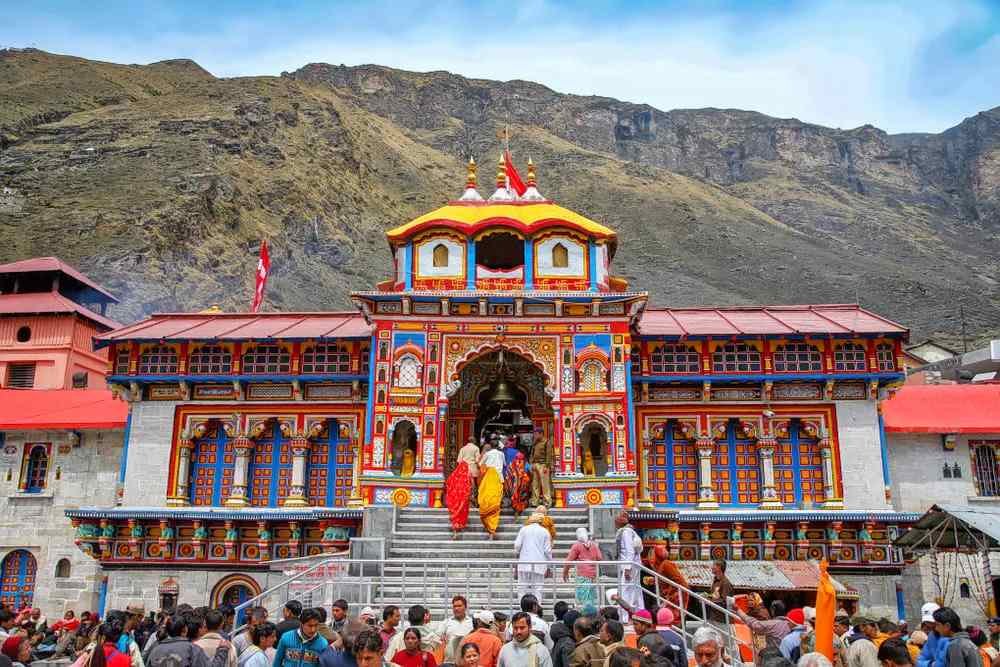
Badrinath Temple, the sacred Char Dham shrine of Lord Vishnu in the Garhwal Himalayas
Badrinath Temple reflects classic North Indian architectural style. Its colorful façade stands out against the rocky Himalayan backdrop. A gold-gilded cupola crowns the structure and catches sunlight beautifully.
Inside the sanctum, the idol of Lord Vishnu sits in a meditative posture. Additionally, the temple complex includes shrines dedicated to Garuda, Narada, and Kubera. Chanting, bells, and rituals create a calm yet powerful spiritual atmosphere.
Tapt Kund and Narad Kund
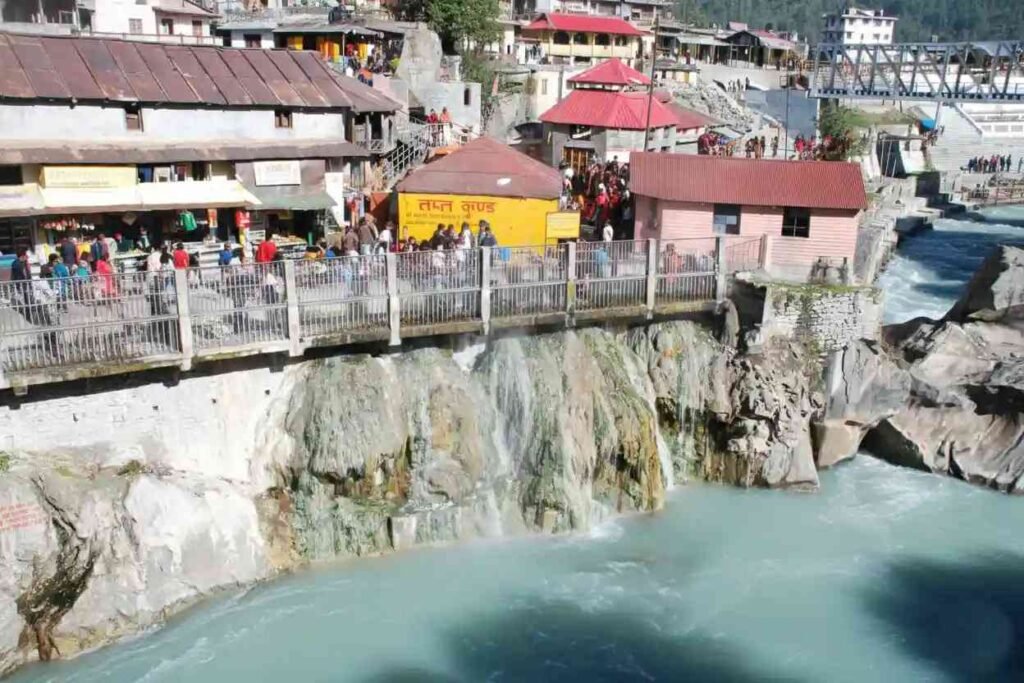
Tapt Kund, the sacred hot spring near Badrinath Temple in Uttarakhand
Before entering the temple, pilgrims usually bathe in Tapt Kund. This natural hot spring remains warm even in freezing temperatures. Therefore, devotees consider it a symbol of purification and healing.
Nearby Narad Kund holds deep importance as the place where the idol was found. Together, these sacred waters complete the spiritual preparation for darshan.
Daily Rituals and Worship
The temple follows ancient Vaishnava traditions. Priests perform Abhishekam, Alankar Puja, Bhog offerings, and Aarti at fixed times.
Interestingly, priests from Kerala’s Nambudiri community conduct the rituals. This practice highlights the unity of India’s spiritual traditions. Moreover, it adds a unique cultural dimension to temple worship.
Badrinath’s Unique Role in Three Pilgrimage Circuits
Badrinath holds a rare distinction. It belongs to three major pilgrimage circuits at the same time.
First, it forms part of the Char Dham Yatra, along with Dwarka, Puri, and Rameshwaram. These four dhams represent India’s four sacred directions.
Second, Badrinath appears in the Chota Char Dham, which includes Yamunotri, Gangotri, and Kedarnath. This circuit focuses on devotion through endurance in the Himalayas.
Third, Badrinath stands as the main shrine of the Panch Badri temples. These five Vishnu temples spread across the Garhwal region.
Because of this overlap, Badrinath connects North, South, East, and West India through faith. Therefore, it acts as a spiritual bridge across the nation.
Badrinath Temple Opening and Closing – 2026
The temple does not follow fixed calendar dates. Instead, priests decide the schedule based on tradition and astrology.
The temple opening date is announced every year on Maha Shivratri. The closing date usually comes around Vijayadashami (Dussehra).
Expected 2026 Season
- Opening: Late April or early May 2026
- Closing: Late October or early November 2026
During winter, priests shift the idol to Joshimath. Worship continues there until the temple reopens.
How to Reach Badrinath Temple
Pilgrims can reach Badrinath by road via Joshimath. Haridwar and Rishikesh serve as the nearest railway stations. The closest airport is Jolly Grant in Dehradun. Additionally, helicopter services operate during the yatra season.
Best Time to Visit
The best months to visit are May to June and September to October. During these periods, weather conditions remain pleasant. Roads also stay open and safer.
FAQs About Badrinath Temple
Is Badrinath part of the Char Dham Yatra?
Yes. It is one of the four sacred Char Dham pilgrimage sites.
Which deity is worshipped at Badrinath?
Devotees worship Lord Vishnu as Badri Narayan.
Is bathing in Tapt Kund compulsory?
No. However, tradition strongly recommends it.
Why does the temple close in winter?
Heavy snowfall makes access unsafe during winter months.
Can senior citizens visit Badrinath?
Yes. However, proper planning and medical advice are important.
Conclusion
Badrinath Temple offers more than a religious visit. It provides a journey of devotion, discipline, and self-discovery. Surrounded by the Himalayas, the temple invites every pilgrim to pause, reflect, and reconnect with the divine.
Whether you visit as part of the Char Dham Yatra or on a personal quest, Badrinath leaves a lasting spiritual imprint.
Jai Badri Vishal.
0 Comments