

The Gangotri Temple stands as one of the most spiritually powerful shrines in India, revered as the divine birthplace of Goddess Ganga. Located high in the Garhwal Himalayas of Uttarakhand, this sacred temple draws pilgrims, sages, and seekers who wish to connect with the eternal flow of faith, purity, and liberation.
Unlike many temples defined by grandeur, Gangotri’s power lies in its silence, altitude, and spiritual depth. Surrounded by snow-fed rivers, pine forests, and towering peaks, the temple offers a rare blend of devotion and untouched natural beauty.
Mythological Importance of Gangotri Temple
According to Hindu belief, the celestial river Ganga descended to Earth at Gangotri through the penance of King Bhagiratha. His intense meditation was performed to redeem the souls of his ancestors, who had been reduced to ashes by a sage’s curse.
When Ganga agreed to descend, Lord Shiva absorbed her force in his matted hair to protect the Earth. From here, her sacred waters began their earthly journey as the Bhagirathi River, later known as the Ganga. Because of this divine event, Gangotri is regarded as a gateway to spiritual purification and ancestral salvation.
Historical Background and Temple Design
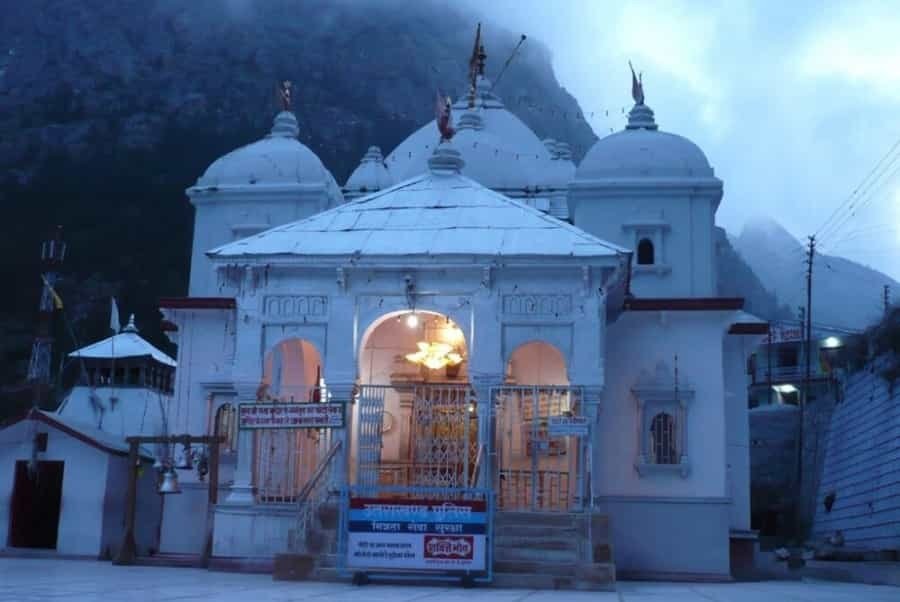
Gangotri Temple at dawn, glowing softly in the serene Himalayan landscape
The existing Gangotri Temple was constructed in the early 18th century and reflects a traditional Himalayan architectural style. Built using locally sourced white granite, the structure is simple yet spiritually commanding.
The temple houses a sacred idol of Goddess Ganga, worshipped daily with Vedic chants and rituals. Despite harsh weather conditions and high altitude, the temple has remained a resilient symbol of faith for centuries.
Spiritual Role in the Char Dham Yatra
Gangotri is a vital part of the Char Dham Yatra, one of Hinduism’s most important pilgrimage circuits. Traditionally, devotees begin the yatra at Gangotri before proceeding to Yamunotri, Kedarnath, and Badrinath.
Starting the journey here symbolizes the birth of life and spiritual awakening, making Gangotri the soul of the Char Dham pilgrimage.
Temple Opening and Seasonal Worship
Due to extreme Himalayan winters, Gangotri Temple is accessible only for part of the year.
- Temple Opens: On the auspicious day of Akshaya Tritiya
- Temple Closes: Around Bhai Dooj, after Diwali
During winter, the idol of Goddess Ganga is ceremonially shifted to Mukhba village, where devotees continue worship until the temple reopens.
Best Time to Visit Gangotri Temple
The most favorable months to visit Gangotri are:
- May to June: Pleasant weather and ideal pilgrimage conditions
- September to October: Clear skies, peaceful atmosphere, fewer crowds
The monsoon season is best avoided due to landslide risks, while winters bring heavy snowfall and temple closure.
How to Reach Gangotri Temple
Gangotri is well connected through a combination of air, rail, and road routes.
- Nearest Airport: Jolly Grant Airport, Dehradun
- Nearest Railway Station: Rishikesh
- By Road: Regular buses and taxis from Uttarkashi, Haridwar, and Rishikesh
The journey itself is spiritually enriching, offering panoramic Himalayan views throughout the route.
Nearby Places of Spiritual and Scenic Interest
Pilgrims visiting Gangotri often explore nearby sacred sites:
- Gaumukh Glacier – The physical source of the Ganga
- Harsil Valley – A serene Himalayan village
- Bhairav Ghati – Known for dramatic mountain landscapes
- Pandava Gufa – Associated with the Mahabharata era
Each destination adds depth to the spiritual experience of the region.
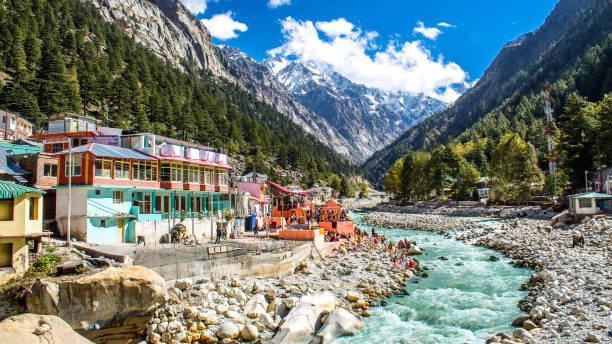
Bhagirathi River near Gangotri, the sacred headstream of the holy River Ganga
Daily Rituals and Worship Practices
Gangotri Temple follows a strict schedule of daily prayers, including morning and evening aartis. Rituals are performed by priests belonging to traditional lineages, preserving ancient Vedic customs.
The rhythmic chanting, temple bells, and the constant sound of flowing water create an atmosphere of deep meditation and inner peace.
Why Gangotri Temple Holds a Special Place
- The spiritual source of the Ganga
- A powerful site for inner cleansing and reflection
- A rare harmony between nature and devotion
- A timeless connection to Hindu mythology and tradition
For many devotees, a visit to Gangotri marks a turning point in their spiritual journey.
Frequently Asked Questions (FAQs)
Is Gangotri Temple suitable for elderly pilgrims?
Yes, but visitors should prepare for cold weather and high altitude conditions.
Can Gangotri be visited without the Char Dham Yatra?
Yes, Gangotri can be visited independently at any time during the open season.
Is accommodation available near the temple?
Yes, basic lodges, guesthouses, and dharamshalas are available in Gangotri and nearby areas.
Are mobile networks available?
Connectivity is limited; BSNL works best in most locations.
Conclusion
Gangotri Temple is a place where faith flows like the river itself—pure, powerful, and eternal. Standing at the sacred origin of the Ganga, pilgrims experience a rare stillness that cleanses both mind and soul. Whether you seek devotion, history, or Himalayan serenity, Gangotri offers a deeply transformative experience.
0 Comments