

The Jagannath Temple Puri is one of India’s most sacred pilgrimage destinations and a vital part of the Char Dham Yatra. Located on the eastern coast of Odisha, this ancient temple is dedicated to Lord Jagannath, a unique and inclusive form of Lord Vishnu worshipped along with his siblings Balabhadra and Subhadra.
More than a place of worship, Jagannath Temple represents devotion, equality, living tradition, and spiritual liberation. Millions of devotees visit Puri every year seeking divine blessings, inner peace, and moksha (liberation).
Spiritual Significance of Jagannath Temple
Jagannath Temple holds a special position in Hindu spirituality due to its universal philosophy. Lord Jagannath is revered as the “Lord of the Universe”, symbolizing compassion beyond caste, creed, or social status.
Unlike most Hindu temples, the deities here are worshipped in wooden form, reflecting a harmonious blend of tribal traditions and classical Hindu philosophy. Devotees believe that a sincere visit to Jagannath Puri has the power to cleanse sins and grant spiritual liberation.
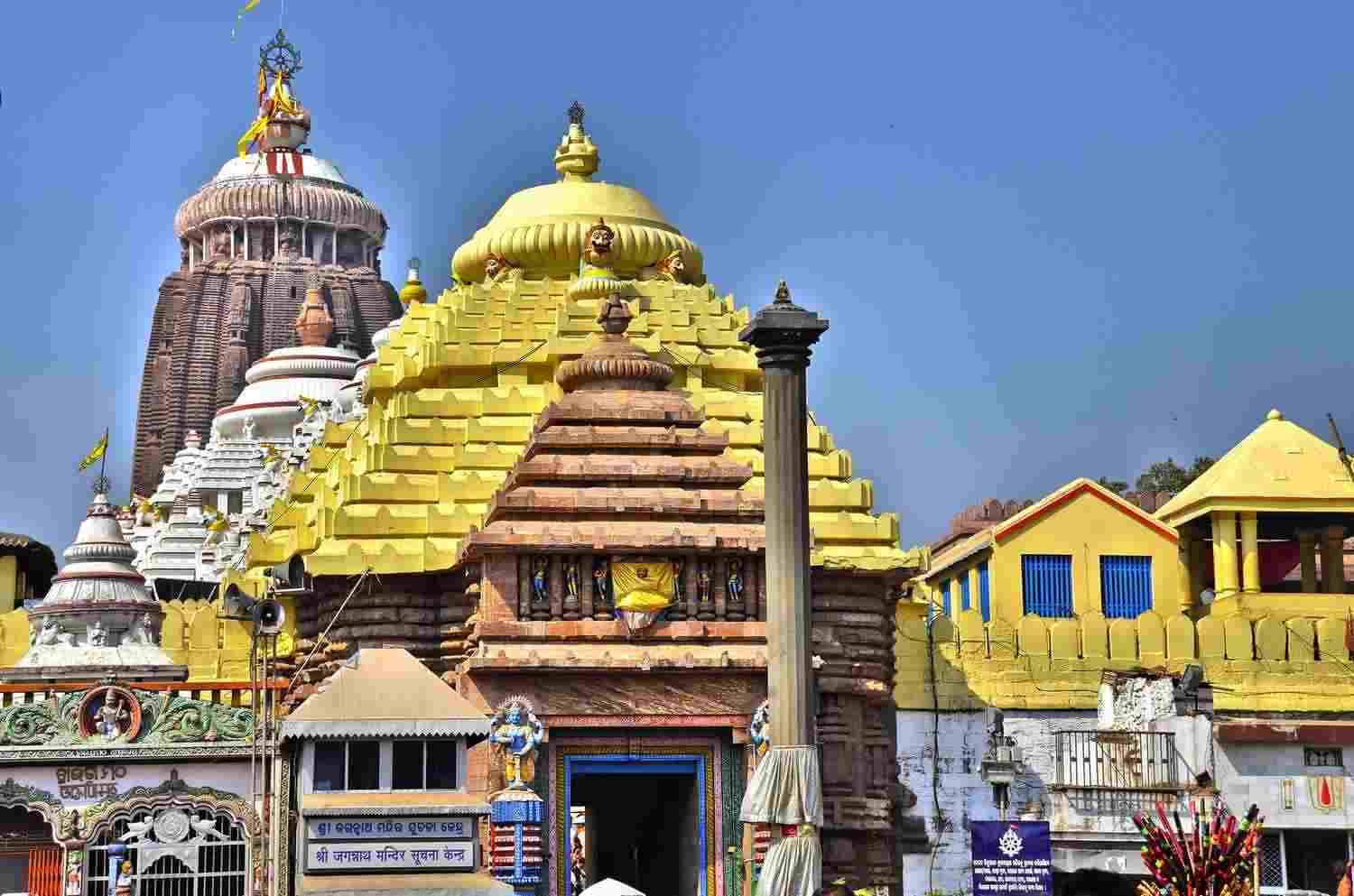
The sacred Jagannath Temple in Puri, Odisha, featuring the golden sanctum and iconic temple spire, one of the four Char Dham pilgrimage sites.
Mythological Origins and Sacred Legends
According to legend, King Indradyumna was divinely guided to establish the worship of Lord Jagannath. The divine architect Vishwakarma appeared as an old carpenter and agreed to carve the idols under one condition—he must not be disturbed.
When the door was opened prematurely, the unfinished wooden forms of the deities were revealed. These same forms are worshipped today, symbolizing the idea that the divine transcends physical perfection.
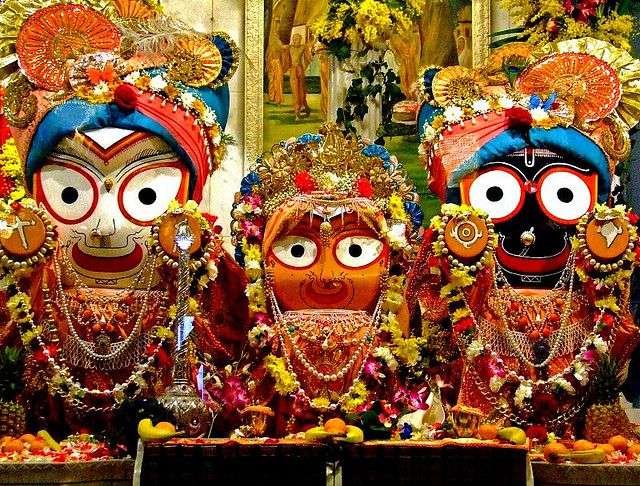
The sacred wooden idols of Lord Jagannath, Lord Balabhadra, and Goddess Subhadra worshipped at the Jagannath Temple, Puri.
Architecture and Temple Complex
Jagannath Temple is an architectural masterpiece built in the Kalinga style. The towering main spire rises about 65 meters, dominating the skyline of Puri.
The temple complex includes:
- Multiple mandapas (halls)
- One of the largest temple kitchens in the world
- Several subsidiary shrines
A fascinating mystery is the temple flag, which always flutters in the opposite direction of the wind and is changed daily without fail.
Daily Rituals and Worship at Jagannath Temple
Jagannath Temple follows an elaborate daily worship schedule where the deities are treated like living beings—woken up, bathed, fed, adorned, and finally put to rest.
Daily Ritual Timings at Jagannath Temple Puri
| Time (Approx.) | Ritual / Offering | Description |
| 5:00 AM | Mangala Aarti | Waking up the deities with sacred hymns and prayers |
| 6:00 AM | Mailam & Abakash | Removal of old clothes, symbolic bathing, and morning purification rituals |
| 7:00 AM | Sakala Dhupa (Breakfast Offering) | First food offering – rice and sweets |
| 9:00 AM | Rosha Homa & Surya Puja | Fire ritual and prayers to the Sun God |
| 11:00 AM – 1:00 PM | Madhyahna Dhupa (Midday Offering) | Largest offering of the day – rice, dal, curries, sweets |
| 7:00 – 8:00 PM | Sandhya Dhupa (Evening Offering) | Evening food offering with floral decoration |
| 10:00 – 11:00 PM | Badasinghara Bhoga (Night Offering) | Final sweet offering of the day |
| 11:30 PM | Pahuda (Closing) | Deities are put to rest and temple closes |
Timings may vary slightly during festivals and special rituals.
What Makes Jagannath Temple Mahaprasad Special?
Mahaprasad is not ordinary temple food—it is considered Lord Jagannath himself in edible form. This belief makes Mahaprasad one of the most sacred offerings in Hinduism.
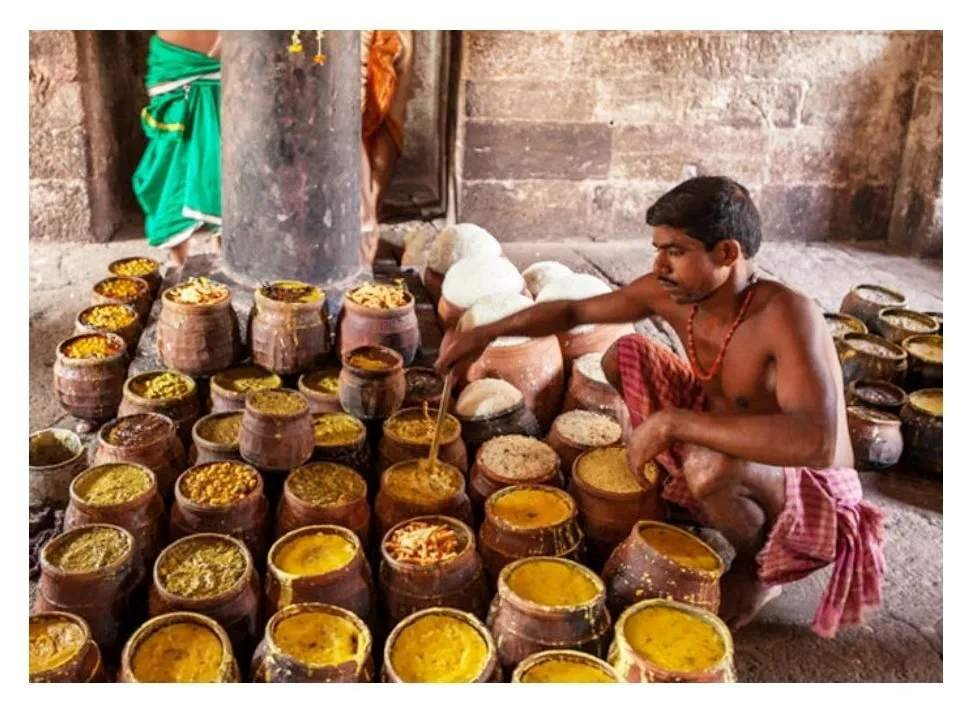
Mahaprasad being prepared in the sacred temple kitchen of Jagannath Temple, Puri, following ancient rituals.
Unique Features of Jagannath Mahaprasad
- Cooked only after being offered to the deities
- Prepared in the world’s largest temple kitchen
- No tasting during preparation
- No caste or social barriers
- Never considered impure
- Eaten sitting on the ground as a symbol of humility
Rath Yatra – The Grand Chariot Festival
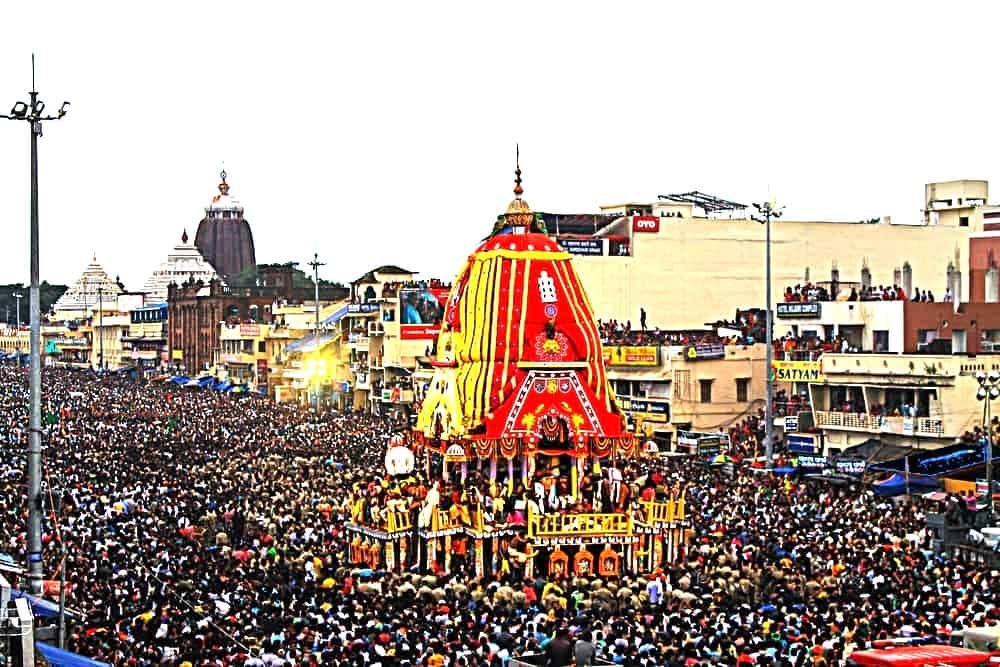
The iconic Rath Yatra of Puri, where Lord Jagannath’s massive chariot is pulled by devotees in a sea of faith and devotion.
The world-famous Rath Yatra is the most celebrated festival of Jagannath Temple. During this event, the deities are taken out of the temple in massive wooden chariots and pulled by devotees through the streets of Puri.
Location:
FAQs About Jagannath Temple Puri
Is Jagannath Temple Puri part of the Char Dham Yatra?
Yes, Jagannath Puri is one of the four sacred Char Dham pilgrimage sites.
Why are Jagannath idols made of wood?
The wooden form represents ancient tribal traditions and symbolizes the impermanence of the material world.
What is Mahaprasad and why is it important?
Mahaprasad is sacred food offered to Lord Jagannath and believed to purify the soul and remove sins.
Conclusion
The Jagannath Temple Puri is not just a religious monument—it is a living tradition that celebrates devotion, equality, and divine compassion. From its sacred rituals and Mahaprasad to the grand Rath Yatra, every aspect of the temple reflects timeless faith and spiritual depth.
Jai Jagannath
0 Comments