

Kalighat Temple is one of the most revered spiritual landmarks in India and a powerful center of Shakti worship. Situated in the southern part of Kolkata, this ancient temple draws millions of devotees every year who come seeking divine protection, inner strength, and spiritual clarity. More than a religious site, Kalighat represents the living soul of Bengal’s devotion to Goddess Kali.
Mythological Significance of Kalighat
According to Hindu mythology, Kalighat is among the most important Shakti Peethas in India. The temple is believed to mark the spot where the toes of Goddess Sati’s right foot fell after Lord Vishnu used the Sudarshan Chakra to end Lord Shiva’s cosmic grief. Because of this sacred association, Kalighat is considered an exceptionally powerful place for Devi worship.
Over time, the belief in the Goddess’s presence transformed Kalighat into a major pilgrimage center. Devotees strongly feel that sincere prayers offered here receive immediate divine attention.
Historical Background and Evolution
Historical references indicate that Kalighat has been a site of worship for more than a thousand years. Initially, the shrine existed near the banks of the ancient Adi Ganga river, from which the area gets its name. However, the current temple structure was constructed in 1809 by Sabarna Roy Choudhury, a prominent family of Kolkata.
Since then, the temple has evolved alongside the city, remaining a spiritual anchor despite rapid urban growth around it.
Distinctive Form of Goddess Kali
Unlike many temples where idols follow classical sculptural forms, the deity at Kalighat has a unique appearance. Goddess Kali here is worshipped with large silver eyes, a gold-plated tongue, and four arms, symbolizing infinite power and awareness. This form emphasizes the Goddess’s fierce yet protective nature.
Devotees believe that the Kalighat Kali is especially responsive to prayers related to fear removal, legal troubles, health concerns, and life obstacles.
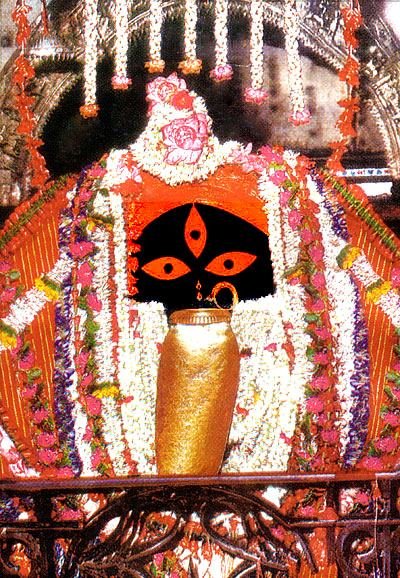
The powerful manifestation of Goddess Kali worshipped at the revered Kalighat Temple in Kolkata.
Architecture and Temple Layout
The temple reflects traditional Bengali architecture, featuring a curved roof and a modest yet spiritually intense design. Surrounding the main sanctum are smaller shrines dedicated to Lord Shiva, Radha-Krishna, and other deities. Despite its compact size, the temple radiates immense spiritual energy.
Furthermore, the temple complex maintains a constant rhythm of bells, chants, and incense, creating an atmosphere of deep devotion throughout the day.
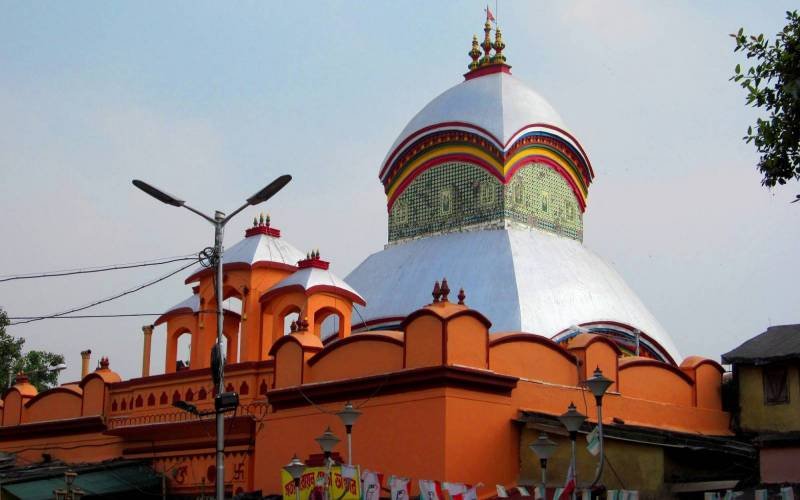
Exterior view of the historic Kalighat Kali Temple, one of the most revered Shakti Peethas in Kolkata.
Daily Rituals and Worship Practices
Kalighat Temple follows ancient Shakta traditions. Priests perform multiple daily rituals, including Mangala Aarti and Bhog offerings. Devotees commonly offer red hibiscus flowers, sweets, fruits, and symbolic items associated with Goddess Kali.
While animal sacrifice has historical significance, today the temple emphasizes symbolic offerings and devotional surrender. Importantly, worship here focuses more on faith and intention than on elaborate rituals.
Festivals and Special Occasions
Kalighat comes alive during Kali Puja, which is celebrated on the new moon night of Diwali. During this time, the temple witnesses massive gatherings, illuminated decorations, and continuous chanting. Additionally, Tuesdays, Saturdays, and Amavasya days attract higher footfall throughout the year.
These festivals highlight the temple’s deep cultural and spiritual impact on Kolkata and beyond.
Spiritual Importance in Modern Times
Even today, Kalighat continues to guide devotees through life’s challenges. People from all walks of life visit the temple to seek blessings for peace, courage, and success. Moreover, the temple plays a key role in preserving Shakti traditions in contemporary Hindu worship.
Location:
Frequently Asked Questions (FAQs)
1. Why is Kalighat Temple considered a Shakti Peetha?
Kalighat is believed to be the site where the toes of Goddess Sati’s right foot fell, making it one of the most sacred Shakti Peethas in India.
2. What is special about the Kalighat Kali idol?
The idol features large silver eyes and a golden tongue, symbolizing divine awareness, power, and protection.
3. When is the best time to visit Kalighat Temple?
Early mornings are ideal for peaceful darshan, while evenings offer a spiritually vibrant atmosphere. Kali Puja is the most significant festival period.
4. Are non-Hindus allowed to visit Kalighat Temple?
Yes, visitors of all faiths are welcome, provided they follow temple rules and respect religious practices.
5. Is photography allowed inside the temple?
Photography is strictly prohibited inside the sanctum to maintain the sacred atmosphere.
6. What offerings are commonly made at Kalighat?
Devotees usually offer hibiscus flowers, sweets, fruits, and symbolic items dedicated to Goddess Kali.
Conclusion
Kalighat Kali Temple stands as a timeless symbol of divine feminine energy and unwavering devotion. Rooted in mythology yet alive in modern spirituality, the temple continues to inspire faith, courage, and transformation. A visit to Kalighat is not just a pilgrimage—it is a deeply personal spiritual journey.
0 Comments