 Nirmala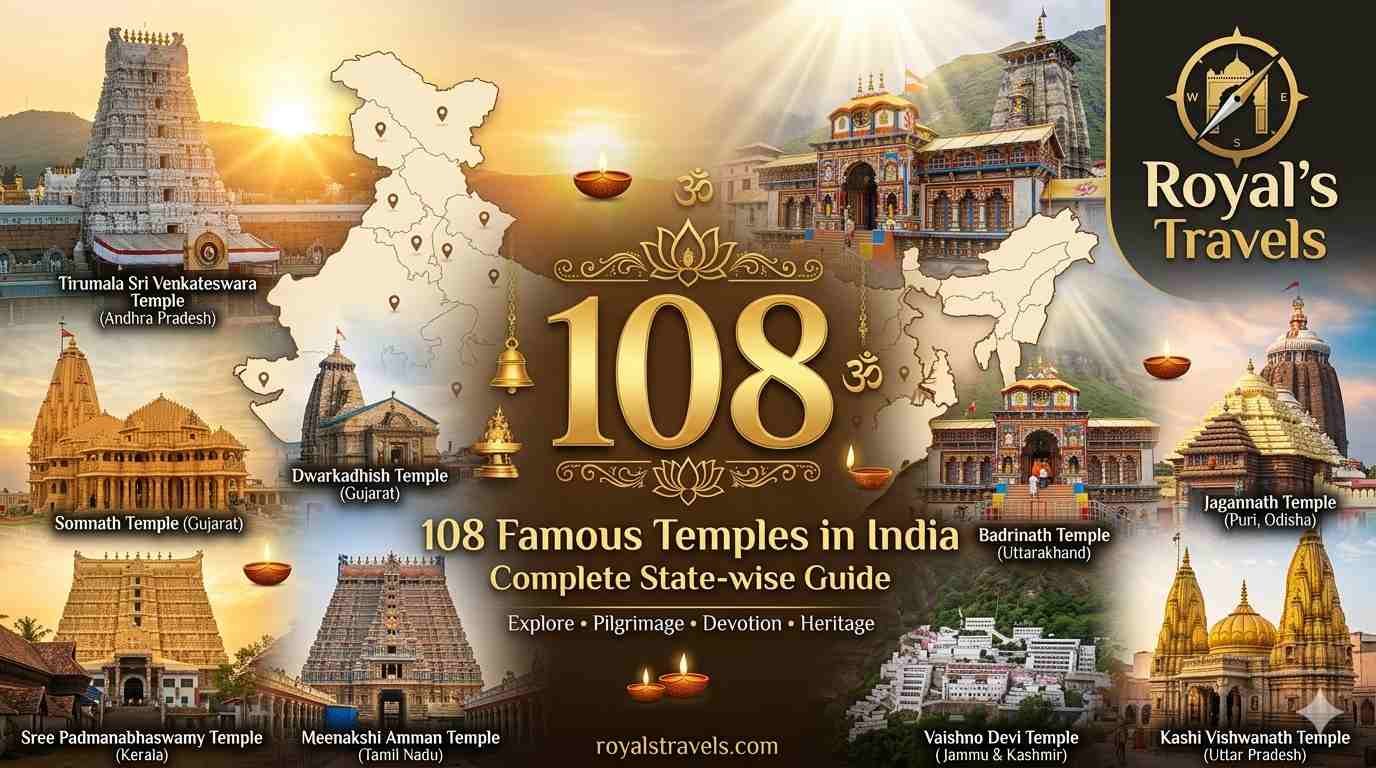
India’s spiritual heritage is unmatched anywhere in the world. With thousands of temples spread across its diverse landscapes, the country attracts millions of pilgrims, tourists, and spiritual seekers every year. From the towering gopurams of South India to the sacred shrines nestled in the Himalayas, every temple has a unique story, tradition, and significance.
Among the countless places of worship, the concept of 108 famous temples in India holds special importance. The number 108 is considered sacred in Hinduism and symbolizes spiritual completeness. Many devotees aspire to visit these revered temples as part of their spiritual journey and to seek divine blessings.
This state-wise guide explores some of India’s most celebrated temples and pilgrimage destinations, helping travelers discover the country’s rich religious and cultural heritage.
The Importance of 108 in Hindu Tradition
The number 108 is deeply rooted in Hindu philosophy and spirituality. It appears in many religious practices and sacred texts.
Some reasons why 108 is considered auspicious include:
- A traditional japa mala contains 108 beads.
- Hindu scriptures mention 108 sacred names of deities.
- There are 108 Upanishads in Hindu philosophy.
- The famous 108 Divya Desam temples are dedicated to Lord Vishnu.
For many devotees, visiting sacred temples associated with this divine number represents a path toward spiritual fulfillment.
South India’s Most Revered Temples
Tamil Nadu
Tamil Nadu is often called the “Land of Temples” because of its extraordinary concentration of ancient shrines and magnificent Dravidian architecture.
Popular temples include:
- Meenakshi Amman Temple, Madurai
- Sri Ranganathaswamy Temple, Srirangam
- Ramanathaswamy Temple, Rameswaram
- Brihadeeswarar Temple, Thanjavur
- Arunachaleswarar Temple, Tiruvannamalai
The state is also home to the majority of the sacred Divya Desam temples.
Andhra Pradesh
Andhra Pradesh houses some of India’s most visited pilgrimage destinations.
Major temples include:
- Tirumala Sri Venkateswara Temple
- Srisailam Mallikarjuna Temple
- Simhachalam Temple
- Kanaka Durga Temple
- Ahobilam Narasimha Temple
Tirumala alone welcomes millions of devotees every year.
Telangana
Telangana’s temples blend devotion, history, and architecture.
Key temples:
- Yadagirigutta Lakshmi Narasimha Temple
- Bhadrachalam Sri Rama Temple
- Chilkur Balaji Temple
- Keesaragutta Temple
- Birla Mandir Hyderabad
Karnataka
Karnataka offers a diverse temple experience ranging from coastal shrines to ancient stone temples.
Notable temples:
- Udupi Sri Krishna Temple
- Murudeshwar Temple
- Dharmasthala Manjunatha Temple
- Kukke Subramanya Temple
- Hoysaleswara Temple
Kerala
Known for its traditional rituals and temple festivals, Kerala remains a major pilgrimage destination.
Famous temples include:
- Sree Padmanabhaswamy Temple
- Guruvayur Temple
- Sabarimala Temple
- Attukal Bhagavathy Temple
- Vadakkunnathan Temple
Famous Temples in Western India
Gujarat
Gujarat is associated with Lord Krishna and several important pilgrimage sites.
Must-visit temples:
- Somnath Temple
- Dwarkadhish Temple
- Nageshwar Jyotirlinga
- Ambaji Temple
- Akshardham Temple
Maharashtra
Maharashtra is known for Jyotirlingas and revered Ganesh temples.
Important shrines:
- Siddhivinayak Temple
- Trimbakeshwar Temple
- Bhimashankar Temple
- Grishneshwar Temple
- Shirdi Sai Baba Temple
Sacred Temples in Northern India
Uttarakhand
Often called Dev Bhoomi (Land of Gods), Uttarakhand is one of India’s holiest states.
Major pilgrimage sites:
- Kedarnath Temple
- Badrinath Temple
- Gangotri Temple
- Yamunotri Temple
- Jageshwar Temple
The Char Dham Yatra attracts devotees from around the world.
Uttar Pradesh
The spiritual heartland of India features many legendary temples.
Popular destinations:
- Kashi Vishwanath Temple
- Shri Ram Janmabhoomi Temple
- Krishna Janmabhoomi Temple
- Banke Bihari Temple
- Sankat Mochan Hanuman Temple
Jammu & Kashmir
Sacred shrines in this region include:
- Vaishno Devi Temple
- Amarnath Cave Temple
- Raghunath Temple
- Shankaracharya Temple
Himachal Pradesh
Known for Shakti Peethas and hill temples.
Important temples:
- Jwala Devi Temple
- Naina Devi Temple
- Chintpurni Temple
- Baijnath Temple
- Hidimba Devi Temple
Eastern India’s Famous Temples
Odisha
Odisha has been a center of temple architecture and devotion for centuries.
Key temples:
- Jagannath Temple, Puri
- Konark Sun Temple
- Lingaraj Temple
- Tara Tarini Temple
- Maa Samaleswari Temple
West Bengal
West Bengal’s temples reflect rich devotional traditions.
Popular temples:
- Dakshineswar Kali Temple
- Kalighat Temple
- Belur Math
- Tarapith Temple
Assam
The spiritual identity of Assam is closely linked to:
- Kamakhya Temple
- Umananda Temple
- Navagraha Temple
The Sacred 108 Divya Desam Temples
One of the most respected temple groups in Hinduism is the 108 Divya Desams. These temples are dedicated to Lord Vishnu and were glorified by the Alwars in ancient Tamil devotional literature.
Distribution of Divya Desams:
- Tamil Nadu – 84
- Kerala – 13
- Andhra Pradesh – 2
- Uttar Pradesh – 4
- Uttarakhand – 3
- Gujarat – 1
- Nepal – 1
Among these, 106 temples are located on Earth, while two are believed to exist in the divine realms of Paramapadam and Thirupparkadal.
Tips for Planning a Temple Tour
To make your pilgrimage comfortable and meaningful:
- Research temple timings before visiting.
- Follow traditional dress codes.
- Book accommodation in advance during festival seasons.
- Respect local customs and rituals.
- Carry essential travel documents.
- Visit during early morning hours for peaceful darshan.
Why Temple Tourism Is Growing in India
Temple tourism has become increasingly popular because it combines spirituality, culture, history, and architecture. Many pilgrims now plan state-wise temple circuits that allow them to experience India’s diverse traditions while exploring sacred destinations.
From ancient stone carvings to centuries-old rituals, India’s temples continue to inspire devotion and wonder among visitors of all ages.
Conclusion
The 108 famous temples in India represent much more than religious landmarks. They are living centers of faith, heritage, and community life. Whether you are undertaking a spiritual pilgrimage, exploring architectural masterpieces, or seeking inner peace, these temples offer unforgettable experiences.
A state-wise temple journey across India allows travelers to connect with centuries of tradition while discovering the country’s remarkable spiritual diversity.
Frequently Asked Questions
What are the 108 famous temples in India?
They refer to some of India’s most sacred pilgrimage sites, including the revered 108 Divya Desam temples and other major Hindu shrines.
Why is the number 108 important in Hinduism?
The number symbolizes spiritual completeness and appears in sacred texts, prayer beads, and temple traditions.
Which state has the most famous temples?
Tamil Nadu is widely regarded as India’s temple capital due to its large number of historic temples.
What are Divya Desam temples?
Divya Desams are 108 sacred Vishnu temples praised by the Alwars in the Naalayira Divya Prabandham.
Which temple receives the highest number of devotees?
Tirumala Sri Venkateswara Temple is among the most visited pilgrimage centers in the world.
What is the best season for temple tourism in India?
October to March offers pleasant weather for visiting most temple destinations across the country.
Can all 108 Divya Desams be visited?
Only 106 can be visited physically. Two are considered celestial abodes of Lord Vishnu.
Are temple tours suitable for family travel?
Yes. Most major temple destinations offer facilities for families, senior citizens, and group pilgrims.