

The Grishneshwar Jyotirlinga holds a deeply revered position among the twelve Jyotirlingas of Lord Shiva. Known as the twelfth and final Jyotirlinga, this sacred shrine is located near the historic Ellora Caves in Aurangabad. Also referred to as Ghrishneshwar or Ghushmeshwar, the temple represents the gentle, forgiving, and compassionate aspect of Lord Shiva.
Though modest in size compared to other Jyotirlinga temples, Grishneshwar radiates immense spiritual power. Devotees believe that worship here helps release emotional suffering, karmic burdens, and inner turmoil, making it a place of healing and spiritual completion.
Spiritual Importance of Grishneshwar Jyotirlinga

“Grishneshwar Jyotirlinga Temple, the twelfth sacred Jyotirlinga of Lord Shiva near Ellora”
As the final Jyotirlinga, Grishneshwar is often considered the culmination of the Jyotirlinga pilgrimage. Spiritually, it emphasizes patience, faith, forgiveness, and surrender rather than grandeur or ritual complexity. Many pilgrims visit this temple after completing other Jyotirlinga darshans, believing that Grishneshwar grants closure, peace, and inner balance.
Worship at this shrine is associated with overcoming grief, misunderstandings, and long-standing emotional pain, reflecting Shiva’s compassionate nature.
Mythological Legend Behind the Temple
The origin of Grishneshwar Jyotirlinga is narrated in the Shiva Purana. A devoted woman named Ghushma lived near a sacred pond and worshipped Lord Shiva daily by immersing a Shiva Lingam in the water as part of her ritual.
Driven by jealousy, her sister-in-law committed a grave act by killing Ghushma’s son and throwing his body into the same pond. Despite her immense sorrow, Ghushma continued her worship with unwavering devotion. Moved by her faith, Lord Shiva appeared, restored her son to life, and manifested at that place as Grishneshwar Jyotirlinga.
This legend powerfully conveys the message that sincere devotion, even in moments of deep suffering, attracts divine grace and justice.
Grishneshwar Temple Architecture and History
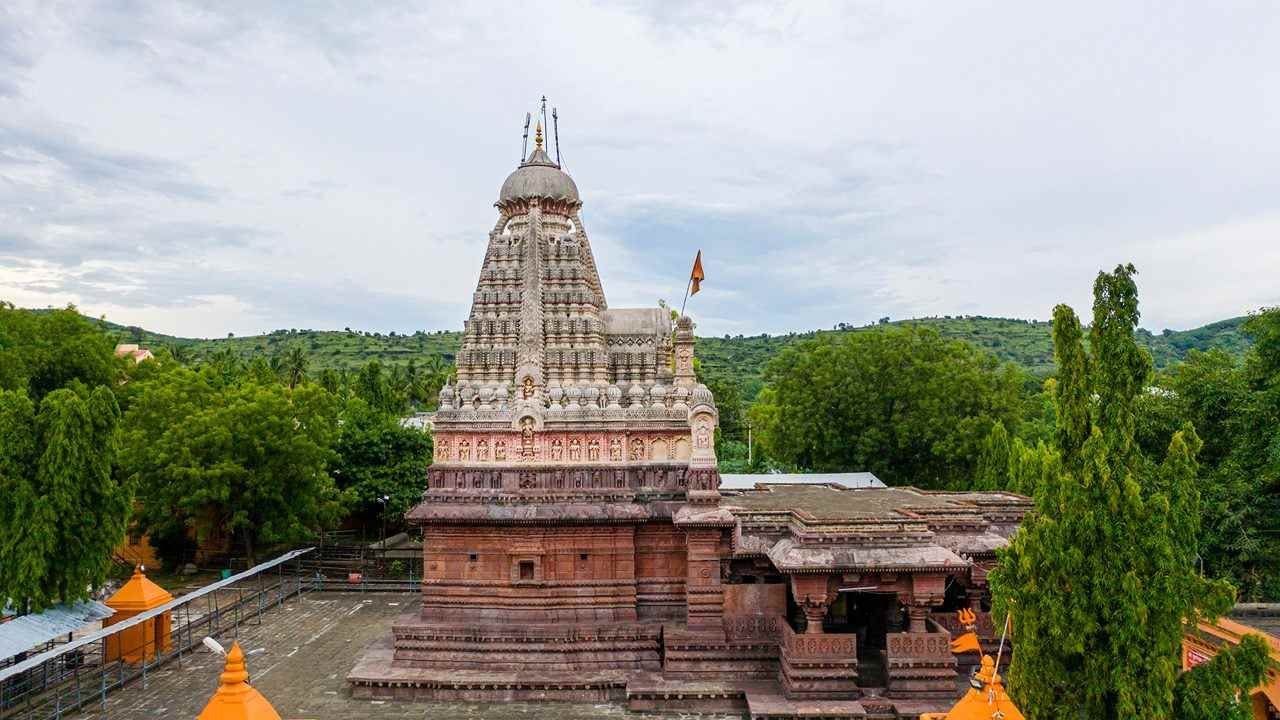
“Grishneshwar Temple, the sacred abode of the twelfth Jyotirlinga of Lord Shiva in Maharashtra”
The Grishneshwar Temple is built in the traditional Hemadpanthi architectural style, using red volcanic basalt stone. The structure reflects simplicity, strength, and spiritual elegance rather than ornate decoration.
Key architectural features include:
- A modest yet beautifully carved shikhara
- Stone sculptures depicting mythological themes
- A sanctum housing the sacred Jyotirlinga
- A calm courtyard ideal for prayer and reflection
The present temple structure was restored in the 18th century by Ahilyabai Holkar, whose patronage helped revive several important Shiva temples across India.
Rituals and Daily Puja Schedule at Grishneshwar Jyotirlinga
Daily worship at Grishneshwar follows ancient Shaivite traditions and offers devotees a rare opportunity for direct interaction with the Jyotirlinga.
04:00 AM – 05:30 AM | Mangal / Kakad Aarti
The day begins with the first aarti, ritual cleansing of the sanctum, and Vedic chanting.
05:30 AM – 11:00 AM | Morning Darshan & Abhishekam
General darshan remains open. Devotees may perform simple Abhishekam using water or milk, making this the most auspicious worship period.
07:00 AM – 11:00 AM | Rudrabhishek & Panchamrit Abhishekam
Special Abhishekams using milk, curd, honey, ghee, and sugar are performed, usually with prior booking.
12:00 PM | Maha Puja & Midday Bhog
Midday worship includes offering sacred food to Lord Shiva, followed by prasad distribution.
01:00 PM – 04:00 PM | Afternoon Darshan
The temple reopens for afternoon darshan, generally with fewer crowds.
04:30 PM – 07:30 PM | Sandhya / Evening Aarti
Evening prayers are conducted with lamps, bells, and devotional hymns.
08:30 PM – 10:30 PM | Shayan / Shej Aarti
The final ritual prepares the deity for rest and marks the close of the day’s worship.
Temple closing time may vary between 9:00 PM and 10:30 PM, especially during festivals.
Dress Code and Temple Customs
Grishneshwar Temple strictly follows traditional customs:
- Men must wear dhoti or traditional attire and remove upper garments inside the sanctum
- Women are advised to wear sarees or salwar suits
A unique feature of this temple is that devotees are allowed to touch the Jyotirlinga during Abhishekam, which creates a deeply personal and spiritually fulfilling experience.
How to Reach Grishneshwar Jyotirlinga
- By Air: Aurangabad Airport is about 30 km away
- By Train: Aurangabad Railway Station is well connected to major cities
- By Road: The temple is easily accessible and located close to Ellora Caves
Many pilgrims combine their visit with Ellora, blending spirituality with heritage exploration.
Best Time to Visit
The most comfortable time to visit Grishneshwar Jyotirlinga is October to March. Mahashivratri and the holy month of Shravan attract large crowds and intense devotion. Early mornings are ideal for peaceful darshan and Abhishekam.
FAQs About Grishneshwar Jyotirlinga
1. Why is Grishneshwar Jyotirlinga important?
It is the twelfth and final Jyotirlinga, symbolizing spiritual completion and compassion.
2. Can devotees touch the Jyotirlinga?
Yes, devotees may touch the Jyotirlinga during Abhishekam.
3. Is Grishneshwar close to Ellora Caves?
Yes, it is located just a few kilometers away.
4. Is there a strict dress code?
Yes, traditional attire is mandatory.
5. What is the best time for darshan?
Early morning hours offer the calmest experience.
Conclusion
The Grishneshwar Jyotirlinga stands as a timeless symbol of devotion, forgiveness, and divine compassion. Rooted in powerful mythology and enriched by centuries of worship, this sacred shrine invites devotees to experience Lord Shiva not as a distant deity, but as a compassionate protector who responds to sincere faith.
A pilgrimage to Grishneshwar is not just a journey—it is a step toward humility, healing, and inner peace.
Har Har Mahadev.
0 Comments